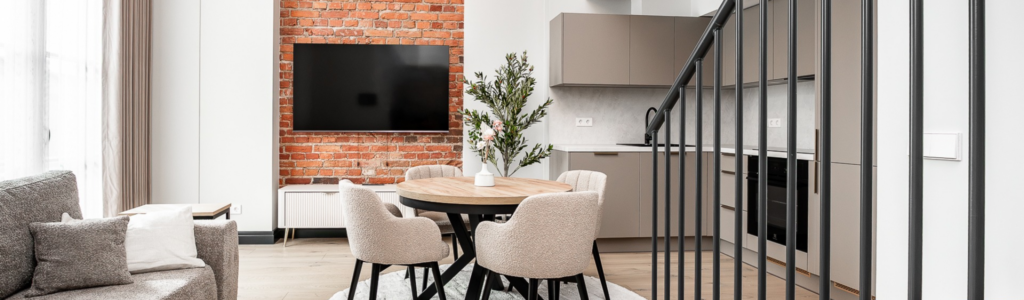
A new home, but is everything really in order? Why involve a construction expert when taking over a new apartment?
Buying a new home is a big and exciting step. When the long-awaited apartment is finished and the handover of keys is approaching, your thoughts are often already on furnishing and moving in. But before moving into your new home, it is worth making sure that everything matches what was agreed. Should a new apartment automatically be flawless, and when is it worth involving an independent construction expert?
Miston Kinnisvara broker Jane Riidamets spoke with Marko Sults, head of Ehituskaitse Büroo, to find out what to look out for when taking over a new apartment, which defects are most common in new developments, and why it pays to involve an independent construction expert when inspecting a home.
Shouldn’t a new apartment automatically be flawless?
Although an apartment in a new development is brand new, that does not always mean that everything is perfect down to the last detail. Many specialists are involved in construction, and even in a well-organised construction process something may go unnoticed or remain unfinished.
According to Marko Sults, an apartment inspection is not just about checking the finishing. It is important to make sure that windows and doors work, water drains where it should, technical systems are ready for use and the agreed solutions are in place.
“A thorough inspection is not a vote of no confidence in the developer. It is a normal part of quality control and of making clear agreements,” Sults explains.
 Miston Kinnisvara broker Jane Riidamets and Marko Sults, head of Ehituskaitse Büroo
It makes sense to discover defects before moving in, because later on furniture and personal belongings can make the inspection more difficult. The question may also arise as to whether the damage was already present at handover or occurred during use. However, failing to note a defect in the acceptance certificate does not automatically mean that the buyer loses the right to contact the seller about it later.
While a scratch on the floor will catch the buyer’s eye, technical problems are harder to spot. For example, inadequate floor slopes in the shower area, window seals, ventilation settings or an insufficient expansion gap for the floor covering may go unnoticed.
Some defects only become apparent later. A window that seems fine in summer may cause draughts in winter, poor ventilation may lead to excess moisture, and a small pipe leak may damage furniture over time.
What defects are most commonly found in new developments?
Based on the experience of Ehituskaitse Büroo, the most common defects relate to finishing, adjustment and unfinished work.
Frequent issues include scratched window panes, doors and floor coverings, uneven paintwork, incorrect skirting board joints, uneven floors, and windows and doors that need adjusting.
In wet rooms, problems may include defective grout joints, loose or damaged tiles, and shower floor slopes that do not direct water properly towards the drain. There may also be shortcomings in the fixing of sanitary fittings and in the settings of technical systems.
Marko stresses that not every deviation automatically means a construction defect. Materials and construction work are subject to certain permitted tolerances, which must be taken into account in the assessment.
What matters is not the number of defects found, but their impact on the quality, safety and everyday use of the apartment.
Why can’t a friend who knows construction always replace a specialist?
Many home buyers bring along a friend or acquaintance with a background in construction when taking over an apartment. While this can be helpful, a friend who knows construction may not be able to replace a professional specialist.
According to Marko Sults, the construction field is very broad. Someone may be an excellent tiler or timber frame builder, but that does not mean they are equally familiar with how ventilation systems work, electrical safety or the quality requirements for different types of finishing work. A person’s knowledge may also be based on experience from years ago, while building materials, technologies and requirements have changed considerably over time. As a result, knowledge acquired long ago may no longer be sufficient for assessing modern construction solutions.
The value of a professional specialist lies not only in spotting defects, but in the ability to assess them technically, justify them and document them correctly. A friend’s assessment may be based on personal experience, whereas a specialist relies on the relevant requirements and quality criteria.
This helps the home buyer discuss possible defects with the developer more clearly and avoid misunderstandings and unnecessary disputes.
What does a construction expert actually do during an inspection?
A professional inspection is a systematic check that assesses the condition of the apartment and the quality of the finishing to the agreed extent.
Walls, ceilings, floors, tiled surfaces, doors, windows and the visible solutions in wet rooms are checked. Where necessary, a spirit level, moisture meter, straightedge or thermal imaging camera is used.
A standard inspection is primarily a visual check. Structures are not opened up, and no in-depth audit of all technical systems is carried out. If there are reasonable grounds for suspicion, the specialist may recommend further testing.
 Papiniidu 54 apartment building inspected by a construction expert
After the inspection, a written report with photos is drawn up, describing the defects and giving recommendations for remedying them.
Good preparation also contributes to a successful inspection. Marko recommends sending the specialist the apartment floor plan, the finishing specification, relevant contract annexes and a list of ordered changes in advance.
Before ordering the service, it is worth finding out about the specialist’s experience, the scope of the inspection, the cost, when the report will be ready and any possible ties to the developer. You could also ask about the possibility of a follow-up inspection.
Sufficient time and access to the rooms being inspected must be agreed with the developer. The apartment should be cleaned and the necessary technical systems ready for use. Inspection of a balcony, terrace, storage room or parking space should be agreed separately.
If possible, the buyer should attend the inspection in person to get answers to their questions.
What happens if defects are found during the inspection?
Finding defects does not automatically mean that the handover of the apartment has to be postponed. What matters is assessing their severity and agreeing on the next steps.
Marko recommends forwarding the written report to the seller named in the contract and recording how the defects will be remedied, the deadlines and the contact persons. Correspondence, photos and agreements should also be kept.
In the event of disagreement, it is worth asking for a technical justification or carrying out an additional check. After the repairs, you need to make sure the defects have been remedied. The buyer can check smaller repairs themselves, but for more extensive work a follow-up inspection is worth considering.
According to Marko Sults, the best time to involve a specialist is before the official handover of the apartment, when it is finished and cleaned. The specialist can also attend the handover, but enough time must be set aside for this. An inspection can also be useful before the end of the warranty period, as some defects only appear with everyday use of the apartment.
In Sults’s view, involving an independent specialist benefits both the buyer and the developer. A properly prepared report helps describe defects precisely, plan repairs and avoid misunderstandings.
A good inspection does not result in a confrontation between buyer and developer, but in a shared understanding of the apartment’s condition and the necessary next steps.
Involving a construction expert is not only important when buying in a new development. With resale properties, a thorough inspection may be even more important, as defects that are not visible at first glance can develop in a building over the years. A specialist helps assess the technical condition of an apartment or house, spot possible moisture damage, worn-out structures and deficiencies in technical systems, and identify the likely extent of renovation work needed in the coming years. This gives the buyer a better picture not only of the property’s current condition but also of possible future costs.
Marko Sults’s most important advice to home buyers is not to rush and to put all important observations and agreements in writing.
Buying a home should be a joyful and positive experience. A thorough inspection and, where necessary, involving an independent construction expert help you make a more informed purchase decision, prevent unexpected expenses and give you confidence that the chosen home meets your expectations.
If you want to be sure of your home’s technical condition or need help with a property inspection, you can find more information on the Ehituskaitse Büroo website www.ehituskaitse.ee